Archive for September 2016
Supporting Racism is Racism
The 9/10/16 news reported that Hillary Clinton had said that half of Donald Trump’s supporters are “deplorables”, a term she used to mean racists, bigots, sexists, xenophobes, homophobes, and the like. The expected blow-back from the Trump campaign was swift and loud, and Trump’s running mate Pence stated that Trump’s supporters were none of those things but were instead hardworking Americans who deserved her respect.
Pence’s response was powerful, but it was not really accurate. It was Trump who introduced racism into the Presidential campaign when he denigrated Mexicans, then proposed to ban all Muslims from entering the U.S. Sexism became part of his campaign as he insulted women. He showed additional prejudice when he disrespectfully mocked a disabled reporter, and he also insulted John McCain, calling McCain a non-hero due to his capture during the Vietnam War. Trump’s insults and bigoted statements have grown so numerous that is has become difficult to remember them all, but the bad taste from hearing them will remain for a long time.
Trump’s core supporters in the Republican primaries loved his rhetoric, unfair as it was. It appealed to their sense that something rightfully theirs had been taken from them. Trump gave them scapegoats, including whole races and religions they could blame for their frustration. Some had lost jobs to technology or trade, but many were simply itching for a fight. Trump fired them up and gave them enemies to hate. They reveled in his disrespectful treatment of others.
Many traditional, mainstream Republicans were horrified by Trump’s messages, but they failed to aggregate around a candidate who could beat Trump in the primaries. Following the Republican national convention, they continued to be dismayed by Trump’s statements, but many of those same dismayed Republicans have said – however untrue – that he is their only choice. They have called him out for his racist remarks but have said they will support him because he is the nominee of their party. House Speaker Paul Ryan has said this in so many words more than once. Ryan described Trump’s words as meeting the very definition of racism, and then he soon followed up by saying he would support Trump as the nominee of “our party”. Faced with evidence of Trump’s racism and an opportunity to make a real stand against it, Ryan chickened out.
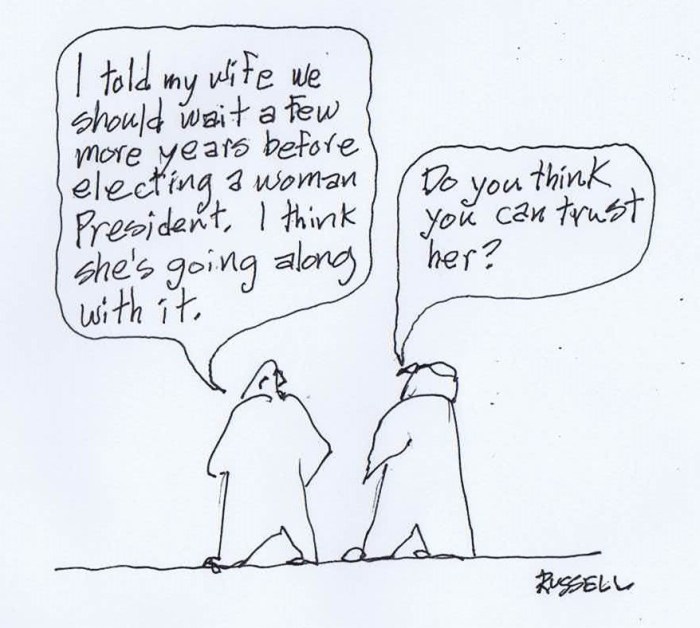
Before Ryan caved in to Trump’s racist bombast, I had respected Ryan and thought he would be a bright light in our nation’s government going into the future. When he chickened out, essentially agreeing to support his party’s racist Presidential candidate just because Trump had won the party’s nomination, Ryan became an accomplice to Trump’s racism, bigotry, sexism, and disrespect. Ryan said he did not agree with things Trump had said, but his disagreement became meaningless in light of his continued support for Trump. In supporting Trump, Ryan is supporting Trump’s behavior, including racism, sexism, and bigotry. Although there might be different shades of support, and Trump’s support may be stronger among outspoken white supremacist individuals and groups, Ryan’s acquiescence is inexcusable, and the same goes for others who want to cover their eyes and claim their own innocence. Supporting racism is racism.
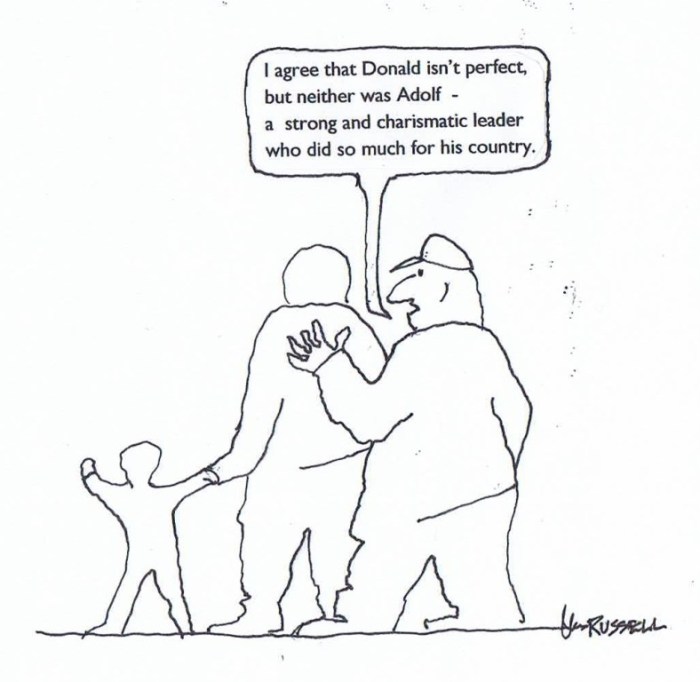
There are parallels in German history and in the history of other countries that practiced racism. In Germany, Hitler’s Nazis – at first a fringe party – gained popular support when Hitler encouraged disgruntled Germans to blame the Jewish people for Germany’s post-World War I economic plight. The Jewish people became the scapegoat race, and Hitler’s supporters allowed the systematic killing of six million Jews in the Nazi death camps. Most of Hitler’s supporters might be considered hardworking people who really meant no ill will but felt powerless to stop the Nazi machine – so they joined it.
Trump’s proclamations may not be equal to the Nazi terror, but the similarities are too strong to ignore. In their early days, the Nazis were laughed at, but as they accumulated power their naughty words became terrible deeds that led to the genocide of millions of innocent people. Following the defeat of the Germany in World War II, people of the civilized world have said repeatedly, referring to the Holocaust, that we cannot let this kind of thing happen again. It’s true that the racism and bigotry of Trump’s Presidential campaign have not yet reached the Nazi extremes, but we are already too close for comfort. Responsible Republicans can still turn away from this path and disavow their deplorable candidate. Trump’s deplorable proclamations do not paint the kind of picture we want for our children, our grandchildren, our neighbors, and ourselves.
The #Trade Trap – #Tariffs Won’t Help
The 2016 presidential campaign season is focusing on international #trade and #trade agreements as causes of job loss and larger scale economic problems. Politicians (at least one in particular) throw blame on the current U.S. Administration and other countries (notably Mexico and China). There is political talk of slapping tariffs on goods from countries (and U.S. offshore companies) accused of unfair trade practices, as if tariffs imposed by the U.S. on imported goods will bring jobs back to the U.S. and improve trade fairness without cost to the U.S. Unfortunately, tariffs are likely to have unintended – but easy to understand – consequences.
A #tariff is simply a tax that has to be paid by a producer or seller of a good – a product. A producer or seller typically sets the price of a good to cover its costs and make a profit, and any tax is typically passed along to the consumer, either as a specific added tax (like a state sales tax added at checkout) or as a cost buried in the price paid by the consumer. When taxes increase, consumers pay a higher price. When producer and seller costs increase, the sale price is typically increased to cover the added cost to the producer or seller. It’s the same with a tariff.
As consumers, we benefit from low prices paid for goods produced offshore – in China, for example, or in Mexico (technically not offshore). We buy incredibly inexpensive clothing. We get much more for much less – we can buy more goods without paying the comparatively higher prices we would have to pay for similar goods produced in the U.S. The comparatively low prices of offshore goods are a result of several factors in the producing country, including less costly labor (the biggest difference) and labor conditions and fewer or less stringent regulations governing production. If you just look at labels on hard goods and even some food products, it’s easy to see that a large percentage of the products we use and purchase regularly are now made in a different country, and they have been for many years. U.S. companies have built or acquired factories offshore in order to offer products at prices that are competitive with other products produced offshore. Labor cost is probably the biggest difference. Laborers in China, in Mexico, and in Third World countries typically work for a small fraction of the amount paid or expected to be paid to U.S. workers doing similar work. In order to compete and thrive in the U.S. or global marketplace, companies producing and selling comparable goods must consider the costs of labor, fringe benefits, and regulations related to working conditions and environmental impact. Although a growing but still relatively small fraction of U.S. consumers selectively shop for goods produced under fair labor standards and environmentally friendly conditions, they are consumers who can afford to be choosy; they are not bound by low prices.
If the U.S. imposes tariffs on goods imported from China or other non-U.S. locations, the prices of those goods would go up, and U.S. consumers would have to pay more for the same goods. The foreign workers who produce them would not benefit; their pay would not increase, and their working conditions would not improve. The U.S. imposed tariff would simply be a tax that foreign sellers would pass along to U.S. consumers as higher prices. We would lose. Yet the difference would not be enough to actually bring those jobs back to the U.S.; we no longer have the industrial infrastructure and sufficient skilled labor force to produce the vast variety and quantity of goods needed today.
Blame the corporations or the labor unions or environmental interests or government regulations, if you will. Tariffs on imported products will not solve the problem of our dependency on foreign products.
Trumped Up Charges
In his August 31, 2016, Phoenix, Arizona, #immigration speech, Donald Trump made a statement that should strike fear into the heart of anyone who might be singled out. He said:
“We will issue detainers for illegal immigrants who are arrested for any crime whatsoever, and they will be placed into immediate removal proceedings if we even have to do that.”
The statement raises the specter of a police state, where police may feel empowered to create or manufacture reasons for arrest. In #Trump’s speech, to be arrested is to be convicted, and “any crime whatsoever” could include jaywalking or even suspicion of shoplifting. It’s easy to imagine other scenarios reminiscent of terrible police states in history.
 albertsperspective