Archive for April 2016
Taking the Hump
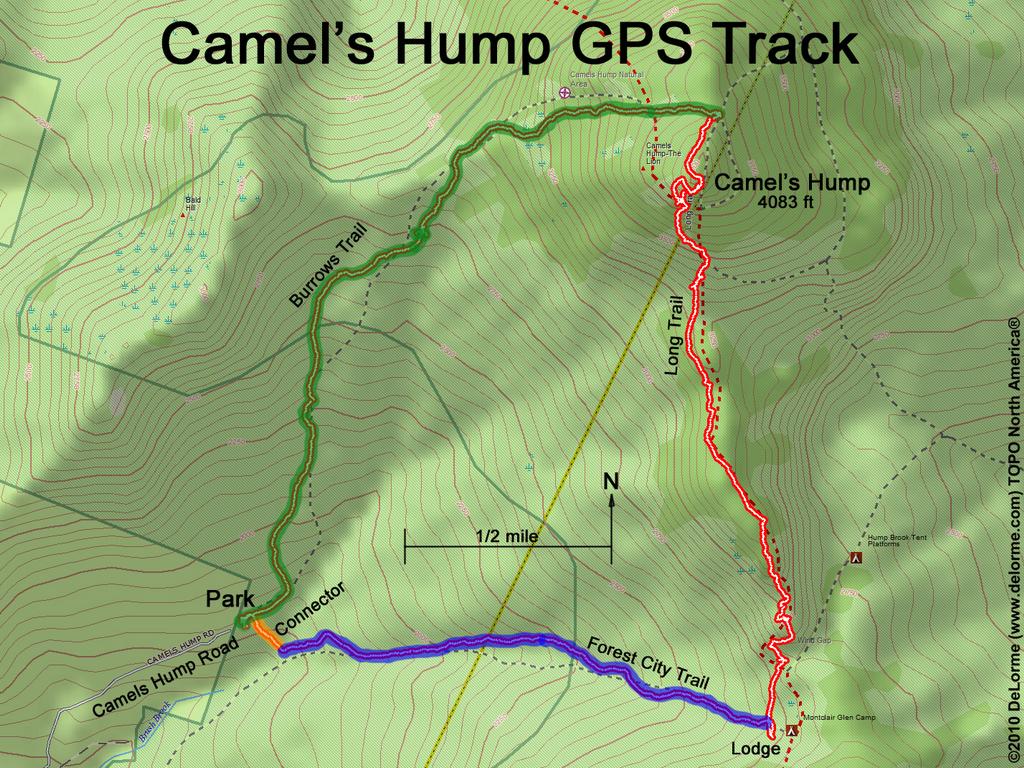
In August 2015, after a little more than 25 years in northwestern Vermont, including an increasing amount of hiking in the last few years – though mostly on vacations in the western U.S., my wife and I decided it was time to hike to the top of Camel’s Hump. We had hiked a few of the less famous mountains in Vermont and had mistakenly concluded that the rocky trails we encountered at Worcester Mountain and Elmore Mountain were unusual and not the norm to be expected on Camel’s Hump. We were definitely wrong about that.
We started from the Huntington side and followed the Burrows Trail on advice from a published guide. As we began our trudge, carrying our day packs full of water, extra layers of clothes, an assortment of trail foods, first aid material, and other articles, we were just a few minutes along and just getting used to the surface roots and rocks when we were passed by a single hiker carrying very little and moving along at a brisk pace. He said it was a beautiful day and a nice trail, and he wished us well and quickly disappeared into the distance. We trudged, as we always seem to do, considering the combined wisdom and discomfort of carrying so much weight up an irregular trail surface, slowly gaining elevation toward our distant goal. Would we get to the top today? Would we have to turn back? My heart thumped as we marched up the trail, and I had to stop frequently, not so much to catch my breath as to let the sound of my pounding heart subside.
Fitness is a relative thing. I am fit enough to tackle such hikes, and I appreciate the sense of accomplishment and the views when I reach the summit; but I am not fit enough to run, trot, or dance my way to the top. My wife and I move at a similar pace, and we both welcome the stops along the way. I don’t often admit it, but I appreciate her interest in stopping now and then for a snack on the trail.
As we labored on, we moved to the side of the trail several times to make way for several groups of young people and families who passed us on the way up. We looked for signs indicating our progress toward the summit, and we found there were not enough to be encouraging.
After what seemed like a half day of trudging, the Burrows Trail joined the Long Trail, and the trail steepened markedly, becoming an uneven series of giant stair steps of jagged rock and boulders, switch-backing in some places as we gained elevation.
“Yes,” I thought. “I am old. I was a fool to think this would be fun. These other hikers must wonder how I got up here and why I would try.” Surely, they imagined their elderly parents or grandparents at home in the rocker or in front of the TV as they came upon us and passed us. They were friendly and sometimes giggly as they patiently waited while we found a good place to step to the side of the trail. I was actually quite pleased when one group was going slowly to accommodate a member who was having noticeable difficulty with the exertion. “Aha!” I thought. “I am not alone. Even young people can be out of shape. Perhaps I will reach the summit ahead of her.” I soon forgot her, though, as conquering the giant steps consumed all of my attention.
The last section of the trail to the summit was more challenging as the rocks grew larger and the trail more treacherous with opportunities to step off into bottomless space. After a near mishap back-fall, we reached the summit and joined a dispersed crowd of hikers, dressed mostly in short sleeves, relaxing on the rocks, chatting, and a few playing with dogs. The dogs were curious but mostly well behaved. A young park ranger moved around the summit, asking hikers about their experience on the trail and at the summit, where they were from and going, and their planned route of descent. I asked her about taking the trail down the south side – was it passable from the top? (It did not appear to be.) She pointed toward a descent that would begin to the north side, wrap around the west side below the summit, and then continue south. It sounded easy enough.
As we started down and found that our steps had to be longer and that we had to rely more on lengthened trekking poles for balance as our feet reached out to land on surfaces that seemed too far away or too far down, I remembered how downhill hiking is often more strenuous than uphill hiking. As I had approached the summit earlier, I had felt a sense of relief that the hardest part of the day’s journey was behind me. Now, as we started down, I realized that going up had been the easiest part, despite the exertion and my pounding heart. Fear of falling had become my greatest challenge for the descent. Every step seemed too long, the landing place too far, the opportunity for mishap too great. We labored on but with a new kind of labor, stopping for breathtaking views and to find the courage to take the next step or few steps along a rock ledge or around a boulder that appeared to project into space. Only the sight or sound of oncoming people assured us that it really was a trail to somewhere other than air.
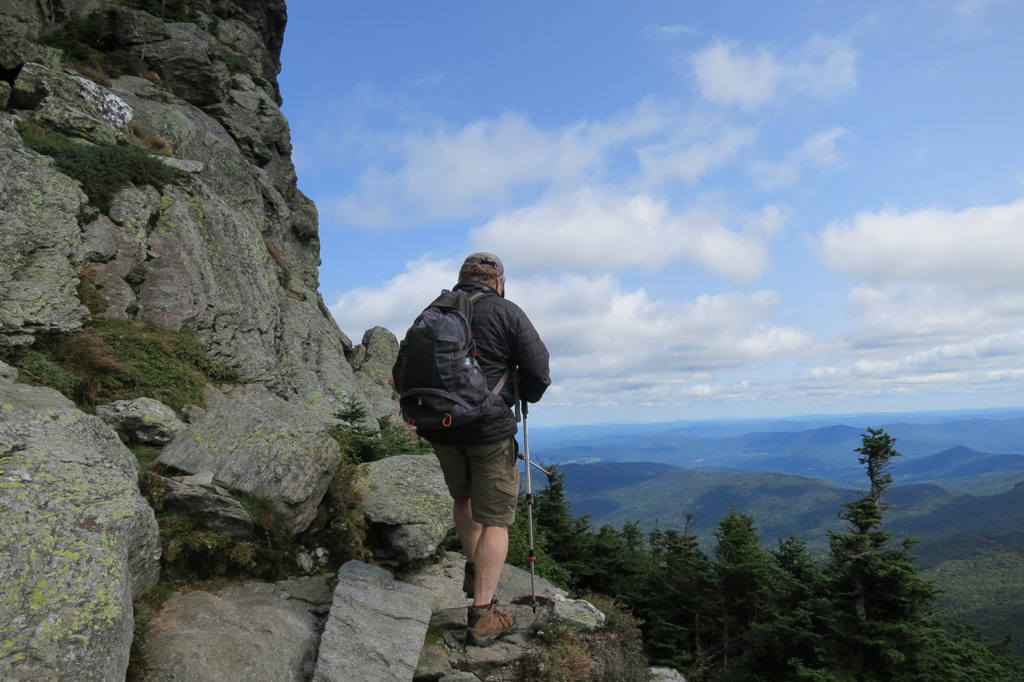
Rounding the bend, looking down south
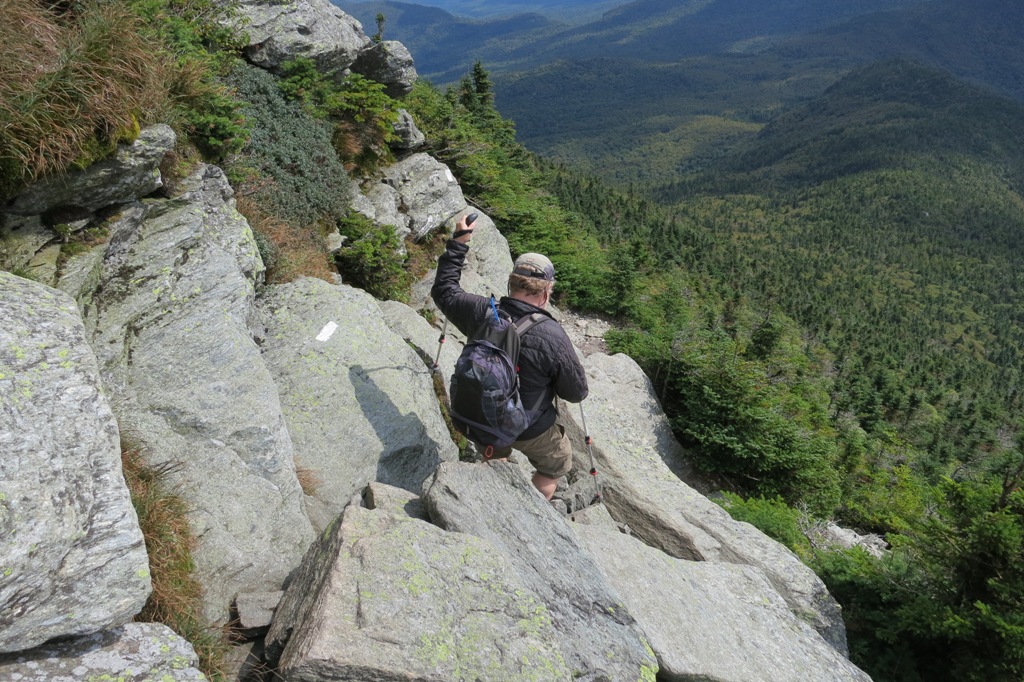
The trail (Long Trail South) seemed to go on forever, challenging us to find its blazes across confusing rock outcroppings, down through rock ravines, and between giant slices of ledge that framed pinched spaces we had to traverse sideways or bent over backward like limbo dancers. “I am not this flexible,” I thought. “My joints need daily pills just to sit down, stand up from a chair, walk to the kitchen and open the refrigerator. These cannot be my bones and joints going through these gyrations and twists and turns to get down from this mountain. I should have waited just a few more years and be satisfied to have seen Camel’s Hump only from a distance. But, it’s too late now. I have to make it down from this mountain.”
We usually talk when the going is fun on the trail, even when we are feeling over-exerted on the way up. We did not talk on the way down this trail. We were each consumed with how to make the next move or series of moves. More than once, we had to backtrack when the apparent route turned out to be too difficult and we had to find an alternative. We went up around trees when the route looked inviting, but found ourselves looking down over cliffs.
It seemed as though we had descended thousands of feet and the sun had set several times before we finally reached the junction with the last leg of our loop – the Forest City Trail. It looked so easy and friendly that we thought we should be able to scamper along it like chipmunks as we envisioned our waiting car in the parking lot. But it was too late. We were too tired, shaken by the stress of the descent, no longer in full control of our extremities, which twitched and ached as we began to be bothered by the weight of our day packs, even though most of the water had been consumed. As we neared the end of the Forest City Trail and thought we would have only a few steps to the parking lot, we turned onto the Connector and discovered, much to our madness, that we had to climb the Connector to a higher elevation to reach the parking lot.
Then it was over. We were back, returning conquerors of Camel’s Hump. There was no one else to tell about it. Anyone we know who also knew the trail had done it quickly and more easily and maybe more than once, or they were people who would not even think of spending a day trudging up a trail and then suffering through such a compromising descent. We talked about it ourselves over dinner and then kept returning to the topic for several days. We swore we would never go there again.
But, who knows, maybe later this year we will do the same loop in reverse. After all, we are only a year older.
 albertsperspective